Nigeria, Benin Customs Formally Commission Facilities for Joint Open Border Post to further Strengthen Seamless Trade
Nigeria, Benin Customs Formally Commission Facilities for Joint Open Border Post to further Strengthen Seamless Trade
By Jerry Aguigbo

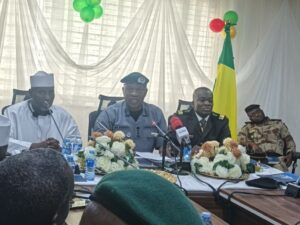
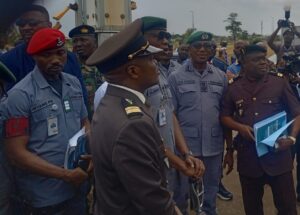
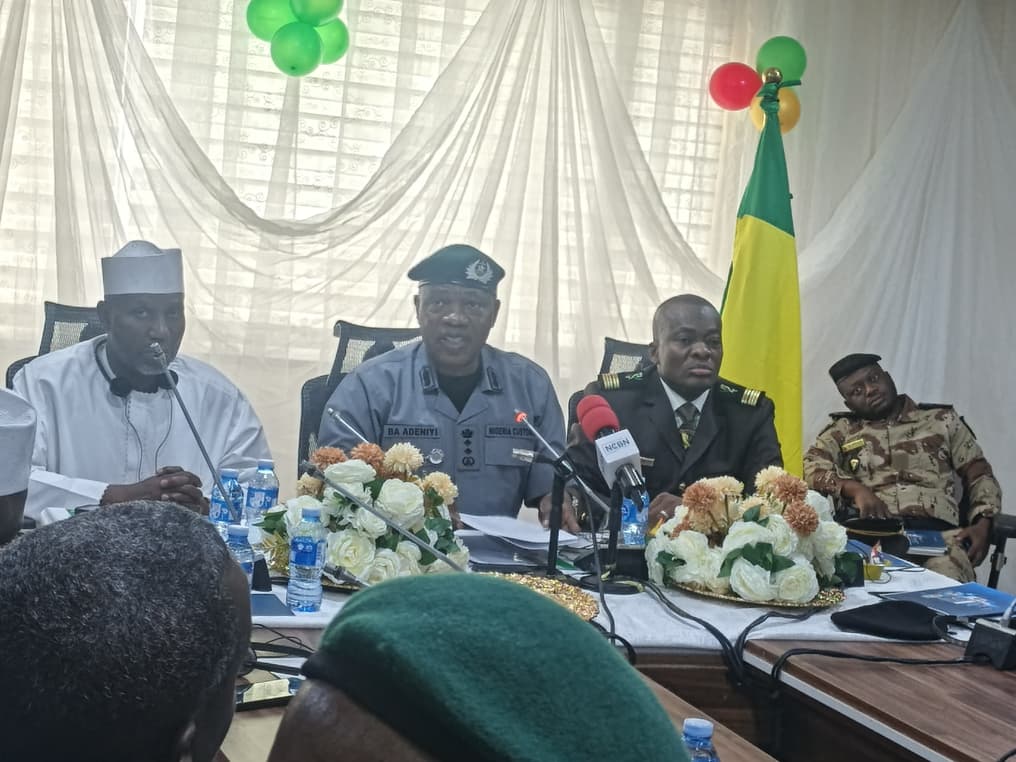
The Customs of Benin and Nigeria have conducted a structured assessment of the Seme Krake joint border post to review operational readiness, observe border processes and facilities, and demonstrate the border modernisation solution supporting secure cross-border interoperability between Nigeria and Benin.
Comptroller General of Nigeria Customs Service, Dr Bashir Adewale Adeniyi received his counterpart, the Director-General of Customs Benin Republic, Col. Raouf Malehhossou Aboudou at the Abijan corridor. The visit combines formal commissioning and joint facility validation with a press, followed by AfCFTA Technical Team presentation and technical demonstration at the Seme border post, on Friday, 11 September, 2026.
Comptroller Adeniyi commended Aboudou for his quick response and understanding of what the program was intended to usher in , according to him, the joint open border progamme is geared towards deepening trade facilitation at the border post. To ensure seamless trade between two neighbours and facilitate easy movement of goods and people through the border.
The assessment he revealed would focus on governance and institutional arrangements, ICT architecture and interoperability, NII, surveillance and command centre readiness, performance and service management.
Others are Customs and border procedures, Cyber security and data governance, infrastructure, utility and equipment and implementation and sustainability requirements.
The decision that produced this arrangement was taken by the authority of the Heads of State and Government in Dakar in 2003, under the ECOWAS Trade, Road, Transport and Transit Participation Programme. The construction of the joint facilities started in 2011. The European Union financed the project under the third European Development Fund for ECOWAS and UNRWA, and it cost almost 18.29 million euros across a very large site of about 17 hectares, and it was commissioned in 2018 by the late Nigerian President, Muhammadu Buhari and his Excellency the former President of Benin Republic.
CGC Adeniyi stated that “in 2022, both our governments signed a bilateral agreement on the operationalisation of the border. So the buildings were delivered, and they were very nice buildings. The lanes, the parkings, the offices, the weigh-bridge that we saw, the scanner, all of them were delivered, and so many of them were delivered.”
“What was never delivered was the thing that makes a joint border post a joint one. Two administrations presently work under one roof, but they do not work with one system. There is still no seamless real-time exchange of declarations, manifest transit information, risk profiles, and cross-net alerts between Nigeria and Benin up to now.
In very clear terms, at the heart of my demand is the establishment that without interconnectivity, this is not a joint border post. It is a border post sharing a car park at best,” he stated.
Continuing, he said, “the concrete was the easy part.
It has been finished since eight years ago. The integration that we are working on is the hard part, and it is the part that customs alone can drive. This is why the Nigeria Customs Service has come to this border with only one specific offer.
We are here to close the gaps that exist in our systems. Work is underway on the interconnection of our two administrations through a common data exchange arrangement, building on the regional transit experience we have both gained, so that the declaration lodged on one side is visible on the other side in real time, so that transit can be tracked from origin to destination, so that a risk profile or an enforcement alert raised by one administration reaches the other, while it is still very useful. Our joint assessment has also identified what must accompany that.
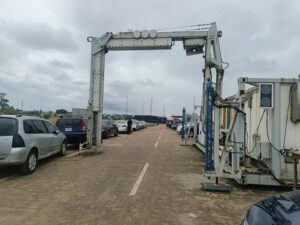
Scanning capability requires restoration. We saw that the scanners are down, so that examination rests on images rather than on opening every crate and boxes that pass through our borders. Access control, surveillance, and lighting require strengthening.”
Adeniyi also said that what the project needs is standing Nigeria within an enforcement and intelligence mechanism for coordinated patrols and rapid response. Where need would be analysed, bilingual scanning and tracing procedures, which will cover cargo, passengers, inspection, transit, and incident escalation. According to him, there’s also need for joint risk management so that resources concentrate on high-risk consignments instead of falling on everything equally.
“We need a properly empowered joint management structure for shared infrastructure and a preventive maintenance framework with named responsibilities and funding attached. And we need order in the air, dedicated lanes, holding areas, signages, and a regulated market space. What we seek to achieve here is that Seme Krake should be treated as a strategic modernisation programme and not as a series of isolated repairs.
The objective is to achieve a model technology-enabled joint border post, build on customs interconnectivity, joint risk management, coordinated enforcement, secure infrastructure, analysed procedures, and accountable joint governance.
” If we achieve that here, we will have built the template for every other crossing within the ECOWAS community and the African continent. I want to now turn to a group of people who are easy to overlook at a ceremony of this kind and who are the majority of those who actually use this product.
Across Africa, women make up more than 70% of those who engage in informal cross-border trade. On this corridor, the pattern is even more pronounced. Some 22% of Benin’s informal exports are destined to Nigeria.
An informal trade is estimated to account for a fifth of economic activity in Nigeria and even a far higher share of that exists in Benin. The study tells us that a woman trading across a West African border typically supports more than three children and a similar number of other dependents from that trade alone. These are household economies, not marginal transactions.”
He disclosed that “the studies also tell us something a little bit less uncomfortable. Women on this corridor are alleged to have faced harassment, extortion, and delay as ordinary features of the border crossing. Where a border is slow, opaque, intimidating, complex, and all those difficulties are experienced, the trader with the least capacity to absorb costs is the one driven around it.
And once she is driven around it, we lose her twice. She loses the protection of the law and the state will lose the revenue. The line between formal and informal trade is very often nothing more than whether the formal route was unusable.
“On this note, it therefore gives me particular satisfaction that the Nigeria Customs Service is launching a dedicated facility to cater for the special needs of women traders on this corridor. Its focus is to bring women into a formal trading system on terms that they can actually meet, simplify procedures for small consignments, clear published information in the languages traders will understand, accessible points of contact, protection against informal demands, and a channel through which a woman who is badly treated can make complaints,” he enthused. we’re on hand at the Abijan corridor. The visit combines formal commissioning and joint facility validation with a press, followed by AfCFTA Technical Team presentation and technical demonstration at the Seme border post, on Friday, 11 September, 2026.
The assessment focused on governance and institutional arrangements, ICT architecture and interoperability, NII, surveillance and command centre readiness, performance and service management.
Others are Customs and border procedures, Cyber security and data governance, infrastructure, utility and equipment and implementation and sustainability requirements.
The decision that produced this arrangement was taken by the authority of the Heads of State and Government in Dakar in 2003, under the ECOWAS Trade, Road, Transport and Transit Participation Programme. The construction of the joint facilities started in 2011. The European Union financed the project under the third European Development Fund for ECOWAS and UNRWA, and it cost almost 18.29 million euros across a very large site of about 17 hectares, and it was commissioned in 2018 by the late Nigerian President, Muhammadu Buhari and his Excellency the former President of Benin Republic.
CGC Adeniyi stated that “in 2022, both our governments signed a bilateral agreement on the operationalisation of the border. So the buildings were delivered, and they were very nice buildings. The lanes, the parkings, the offices, the weigh-bridge that we saw, the scanner, all of them were delivered, and so many of them were delivered.”
“What was never delivered was the thing that makes a joint border post a joint one. Two administrations presently work under one roof, but they do not work with one system. There is still no seamless real-time exchange of declarations, manifest transit information, risk profiles, and cross-net alerts between Nigeria and Benin up to now.
In very clear terms, at the heart of my demand is the establishment that without interconnectivity, this is not a joint border post. It is a border post sharing a car park at best,” he stated.
Continuing, he said, “the concrete was the easy part.
It has been finished since eight years ago. The integration that we are working on is the hard part, and it is the part that customs alone can drive. This is why the Nigeria Customs Service has come to this border with only one specific offer.
We are here to close the gaps that exist in our systems. Work is underway on the interconnection of our two administrations through a common data exchange arrangement, building on the regional transit experience we have both gained, so that the declaration lodged on one side is visible on the other side in real time, so that transit can be tracked from origin to destination, so that a risk profile or an enforcement alert raised by one administration reaches the other, while it is still very useful. Our joint assessment has also identified what must accompany that.
Scanning capability requires restoration. We saw that the scanners are down, so that examination rests on images rather than on opening every crate and boxes that pass through our borders. Access control, surveillance, and lighting require strengthening.”
Adeniyi also said that what the project needs is standing Nigeria within an enforcement and intelligence mechanism for coordinated patrols and rapid response. Where need would be analysed, bilingual scanning and tracing procedures, which will cover cargo, passengers, inspection, transit, and incident escalation. According to him, there’s also need for joint risk management so that resources concentrate on high-risk consignments instead of falling on everything equally.
“We need a properly empowered joint management structure for shared infrastructure and a preventive maintenance framework with named responsibilities and funding attached. And we need order in the air, dedicated lanes, holding areas, signages, and a regulated market space. What we seek to achieve here is that Seme Krake should be treated as a strategic modernisation programme and not as a series of isolated repairs.
The objective is to achieve a model technology-enabled joint border post, build on customs interconnectivity, joint risk management, coordinated enforcement, secure infrastructure, analysed procedures, and accountable joint governance.
” If we achieve that here, we will have built the template for every other crossing within the ECOWAS community and the African continent. I want to now turn to a group of people who are easy to overlook at a ceremony of this kind and who are the majority of those who actually use this product.
Across Africa, women make up more than 70% of those who engage in informal cross-border trade. On this corridor, the pattern is even more pronounced. Some 22% of Benin’s informal exports are destined to Nigeria.
An informal trade is estimated to account for a fifth of economic activity in Nigeria and even a far higher share of that exists in Benin. The study tells us that a woman trading across a West African border typically supports more than three children and a similar number of other dependents from that trade alone. These are household economies, not marginal transactions.”
He disclosed that “the studies also tell us something a little bit less uncomfortable. Women on this corridor are alleged to have faced harassment, extortion, and delay as ordinary features of the border crossing. Where a border is slow, opaque, intimidating, complex, and all those difficulties are experienced, the trader with the least capacity to absorb costs is the one driven around it.
And once she is driven around it, we lose her twice. She loses the protection of the law and the state will lose the revenue. The line between formal and informal trade is very often nothing more than whether the formal route was unusable.
“On this note, it therefore gives me particular satisfaction that the Nigeria Customs Service is launching a dedicated facility to cater for the special needs of women traders on this corridor. Its focus is to bring women into a formal trading system on terms that they can actually meet, simplify procedures for small consignments, clear published information in the languages traders will understand, accessible points of contact, protection against informal demands, and a channel through which a woman who is badly treated can make complaints,” he enthused.
About The Author