FG Flags Off ₦1.45 Trillion LAGOS Ports Modernisation, Targets 20,000 Jobs, 48-Hour Cargo Clearance
FG Flags Off ₦1.45 Trillion LAGOS Ports Modernisation, Targets 20,000 Jobs, 48-Hour Cargo Clearance
By Success Okezie
For decades, Nigeria watched its ports age while its economy grew. On Wednesday, November 25, 2026, that story began to change.
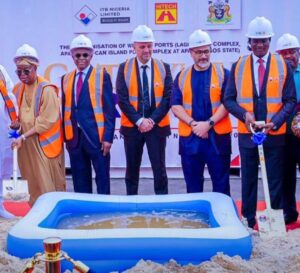
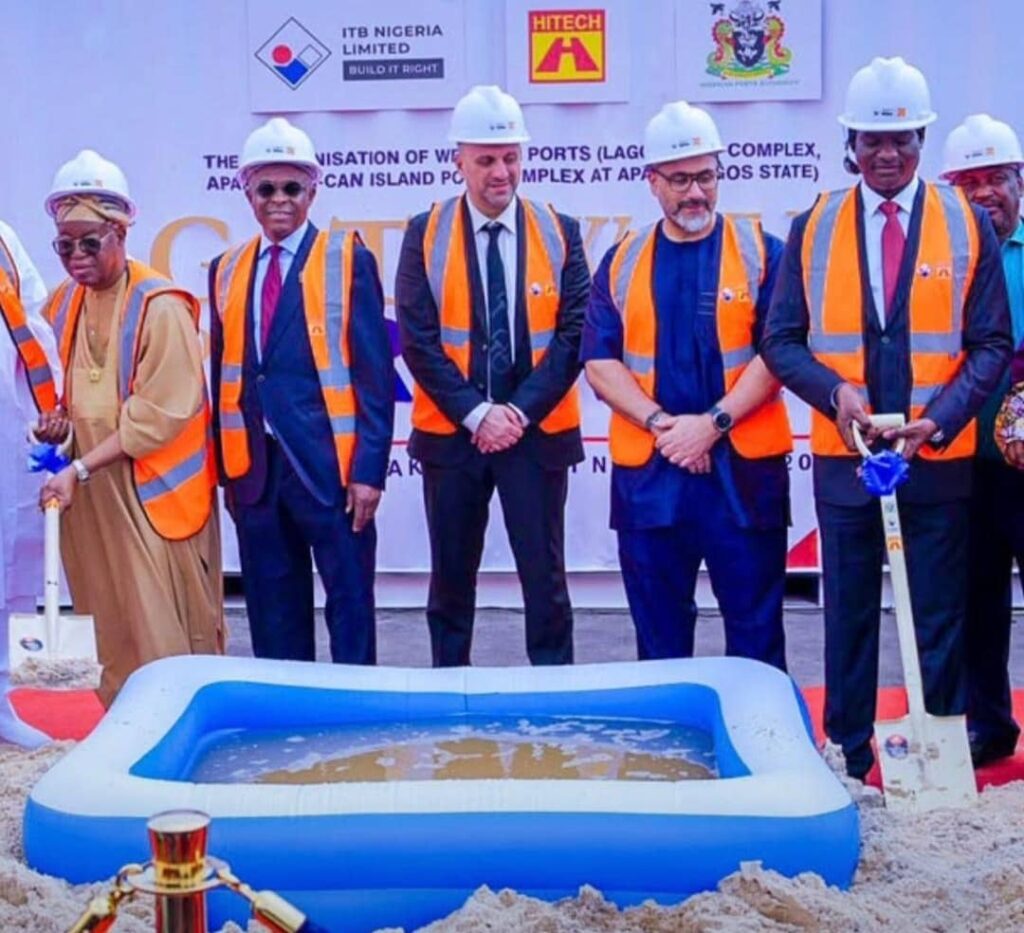
In a colourful groundbreaking ceremony at the Tin Can Island Port, the Federal Government officially flagged off the modernisation and upgrade of the Lagos Port Complex, Apapa, and Tin Can Island Port — a massive ₦1.45 trillion project that promises to reposition Nigeria as the leading maritime hub in Africa.
It was not just a ceremony. It was a declaration: Nigeria will no longer surrender its trade to its neighbours. Nigeria will no longer lose billions to congestion, delay and inefficiency. Nigeria will build ports fit for the 21st century.
The Minister of Marine and Blue Economy, Dr Adegboyega Oyetola, who led the flag-off, was supported by the Minister of Finance and Coordinating Minister of the Economy, Mr Taiwo Oyedele, and other senior government officials.
Oyetola said the project, which would cost £746 million — approximately ₦1.45 trillion — would address decades of infrastructure deficits, reduce logistics costs, attract international shipping lines, stimulate industrial growth and create at least 20,000 direct and indirect jobs.
He described the modernisation programme as a significant step towards realising President Bola Ahmed Tinubu’s Renewed Hope Agenda, which prioritises infrastructure development as a catalyst for economic growth, investment and job creation.
“This is not just about concrete and cranes. This is about jobs, trade, competitiveness and the future of Nigeria,” Oyetola said.
Oyetola did not mince words. He painted a stark picture of how Nigeria has outgrown its own ports.
Apapa Port, he reminded the gathering, was established in 1913 — more than a century ago. Tin Can Island Port was commissioned in 1977 — nearly 50 years ago.
In 1977, Nigeria’s population was approximately 67.2 million. Annual trade was about $17 billion. Cargo throughput was 8.11 million metric tonnes.
Today, the story is completely different.
Nigeria’s population has grown to approximately 240 million. Merchandise trade exceeds $100 billion annually. Cargo throughput has increased to 129.3 million metric tonnes — nearly 16 times its 1977 level.
The ports, however, remained largely the same.
Oyetola stressed that the mismatch between growing economic activities and ageing port infrastructure had made comprehensive modernisation both urgent and unavoidable.
“The cost of inaction is far greater than the cost of modernisation,” he declared, drawing applause from stakeholders. “Nigeria will not surrender its competitive advantage.”
The Minister laid out a bold vision.
“Our ambition is to attract more direct calls by international shipping lines, retain Nigerian-bound cargo, expand transshipment opportunities and establish our ports as preferred gateways to trade across the African Continental Free Trade Area. We cannot achieve this ambition with infrastructure that falls behind the demands of modern shipping.”
For years, Nigerian-bound cargo has been diverted to neighbouring countries — Cotonou, Lome, Tema — because those countries invested in deep-sea ports and modern cargo-handling facilities while Nigeria lagged behind.
Oyetola warned that Nigeria could no longer afford to lose maritime business to neighbouring countries.
The modernisation, he said, will change that equation.
One of the most powerful moments of the ceremony was when Oyetola spoke about cargo dwell time — the time it takes for cargo to be cleared from the port.
At Nigerian ports, he lamented, cargo dwell time had historically ranged between 10 and 18 days, compared with three to five days at leading international ports.
That delay, he said, results in congestion, demurrage, storage charges and higher logistics costs.
And the cost to the nation is staggering: these inefficiencies were estimated to cost the Nigerian economy as much as $4 billion annually.
$4 billion. Every year. Lost to delay.
That is money that could have built schools, hospitals, roads. Money that could have reduced the price of food, medicines, and goods in the market. Money that importers pass on to consumers.
The new target is clear: *48-hour cargo clearance.*
Faster clearance means cheaper goods. Cheaper goods mean lower inflation. Lower inflation means relief for every Nigerian family.
Oyetola gave details of the comprehensive scope of the project:
“The project will entail the comprehensive rehabilitation and upgrading of critical port infrastructure, including quay walls and berths, dredging and navigation channels, access facilities, cargo-handling equipment and operational systems. It will address longstanding physical constraints while advancing more integrated, efficient and digitally enabled port operations.”
In simple terms:
– *Quay walls and berths* will be rebuilt to receive bigger vessels
– *Channels will be dredged* deeper for safe navigation
– *Access roads and facilities* will be upgraded to ease truck movement
– *Modern cargo-handling equipment* will be deployed
– *Digital systems* will be introduced to make port operations faster, transparent and paperless
It is a total overhaul — not a patch, not a paint job, but a rebuild.
The Minister projected that the project would generate at least 20,000 direct and indirect jobs across construction, engineering, dredging, logistics, transportation, port operations and related services.
For young Nigerians, for engineers, for dockworkers, for truck drivers, for logistics operators — this is hope made concrete.
But Oyetola went further. He spoke about exporters — the farmers, manufacturers, agro-processors, and small business owners who struggle to get their goods to the world.
“Our agricultural products, processed foods, solid minerals, manufactured goods, textiles and petrochemical products must compete effectively in regional and global markets. Efficient ports will help exporters meet delivery schedules, reduce costs, preserve product quality and secure international buyers’ confidence. They will equally create a more enabling environment for manufacturers, agro-processors and micro, small and medium-sized enterprises.”
For the yam farmer in Benue, the cocoa exporter in Ondo, the textile maker in Kano, the cashew processor in Enugu — an efficient port means their goods can reach the world on time, in good condition, and at a competitive price.
A major fear among stakeholders was: will construction shut down the ports?
Oyetola moved quickly to calm that fear.
He said he has approved an Inter-Ministerial Committee comprising the Federal Ministry of Marine and Blue Economy, the Nigerian Ports Authority and the Nigeria Ports Economic Regulatory Agency to develop a comprehensive Port Business Continuity and Cargo Flow Management Plan.
“The plan will coordinate phased construction, vessel scheduling, cargo evacuation, truck traffic and the use of alternative ports and transport modes where necessary,” he said.
In other words: the ports will keep working while they are being rebuilt. Construction will be phased. Vessels will be scheduled. Trucks will be managed. Alternative ports and transport modes will be deployed where necessary.
Trade will not stop. It will get better.
Oyetola made it clear that Lagos is only the beginning.
He said the Lagos ports project formed part of a broader national maritime transformation agenda, which also included the approved modernisation of Onne, Rivers, Delta and Calabar ports.
From the East to the South-South, from the West to the North’s inland waterways, the Federal Government, he said, is pursuing a national plan to make Nigeria’s maritime sector a true engine of growth.
Also speaking, the Minister of Finance and Coordinating Minister of the Economy, Mr Taiwo Oyedele, described the modernisation programme as a major step towards reducing the cost of doing business, strengthening the country’s competitiveness and accelerating economic growth.
He noted that more efficient port operations would reduce delays and associated costs for importers and exporters, improve the competitiveness of Nigerian goods and deliver wider benefits to manufacturers, farmers and consumers.
Oyedele revealed a detail that underscored the international significance of the project: he described the transaction as Nigeria’s largest sovereign export credit transaction since 2009 and Poland’s Export Credit Insurance Corporation, KUKE’s first project in the country.
That, he said, is a strong demonstration of international investor confidence in Nigeria’s economic reforms.
The world, in other words, believes in Nigeria again — and is putting its money where its belief is.
Oyedele reaffirmed the Federal Government’s commitment to providing timely approvals, a stable and predictable operating environment, and transparency throughout the project’s financing and implementation.
“This government will not only start projects. It will finish them — transparently, accountably, and on time,” he assured.
Managing Director of the Nigerian Ports Authority, Dr Abubakar Dantsoho, described the groundbreaking as a landmark moment in the history of the Authority and reaffirmed its commitment to delivering the project in accordance with approved designs, engineering standards and contractual timelines.
He assured stakeholders that the NPA would maintain robust technical supervision, quality assurance and effective coordination throughout construction, with particular attention to safety, environmental standards and the continuity of port operations.
For Dantsoho, this was not just another project. It was a legacy project — one that will define the NPA for generations.
The ceremony was attended by Poland’s Deputy Foreign Minister, Marcin Bosacki; Polish Ambassador to Nigeria, Michal Cygan; and the British Deputy High Commissioner in Lagos, Jonny Baxter, alongside contractors, international financing partners and major stakeholders in the maritime industry.
Their presence was symbolic: Nigeria’s port modernisation is not a local project. It is a global partnership.
When the speeches ended and the shovels hit the ground, one question remained: what does this mean for the ordinary Nigerian?
It means:
– *Cheaper goods* — because faster clearance means lower logistics costs
– *More jobs* — 20,000 direct and indirect jobs, and many more in the value chain
– *More exports* — Nigerian goods competing and winning in global markets
– *Less congestion* — fewer trucks stuck on Apapa roads for days
– *More revenue* — for government, for businesses, for the nation
– *A stronger Nigeria* — a country that can trade with the world on its own terms
For too long, Nigeria’s ports were a symbol of delay. From Wednesday, they began a journey to become a symbol of efficiency.
The groundbreaking at Tin Can Island was not the end. It was the beginning.
And if the promises are kept — if the timelines are met, if the funds are transparently managed, if the continuity plan works — then in a few years, Nigerians will tell a new story about their ports:
A story of 48 hours, not 18 days. A story of jobs, not joblessness. A story of a nation that finally built ports worthy of its greatness
About The Author