At Seme, A New Controller Draws A Hard Line: No Leakages, No Intimidation, No Excuses
 At Seme, A New Controller Draws A Hard Line: No Leakages, No Intimidation, No Excuses
… Alumanah Takes Over From Kaila After ₦27bn Revenue Leap, Vows To Make Discipline And Dignity The New Culture Of The Border Command
By Success Okezie
Seme is not just a border. It is a living, breathing economic artery.
Every day, trucks roll in and out. Traders cross with goods. Transporters hustle. Agents push files. Families depend on what moves across that corridor between Nigeria and Benin Republic.
Whoever commands Seme does not just command officers. He commands the mood of trade itself.
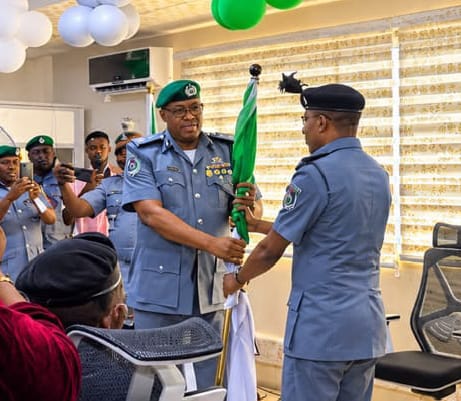
On Wednesday, that command changed hands.
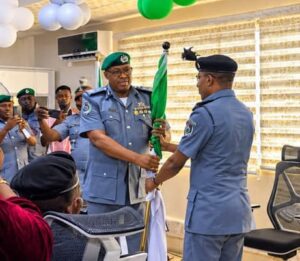
Deputy Comptroller Olisa Alumanah formally assumed duty as Acting Controller of the Seme Area Command of the Nigeria Customs Service, taking over from Abdullahi Kaila, who has just been elevated to Assistant Comptroller-General.
It was a handover from a record-setter to a reformer. And from his very first address, Alumanah made it clear: he did not come to Seme to be celebrated. He came to be accountable.
Alumanah did not spend his first day on pleasantries. He spent it drawing lines.
He warned officers against misconduct, abuse of office, revenue leakages, unnecessary delays in clearing processes, and any form of intimidation of legitimate traders and agents.
He made it unmistakably clear: his leadership would not tolerate indiscipline, compromise, or any practice that undermines revenue collection or the core mandate of the Service.
“There will be no room for compromise, negligence or any action that short-changes the government. Our focus must remain on revenue generation, transparency and accountability,” he stated.
It was a short sentence. But in a border command where compromise has historically been the quiet killer of revenue, it landed like thunder.
Alumanah laid out his agenda with the clarity of a man who had already studied the Command before arriving.
His priorities: stronger revenue performance, smoother trade facilitation, intelligence-driven enforcement, strict discipline, professionalism, and closer cooperation with stakeholders.
Officers were directed to collect every legitimate duty owed to the Federal Government — not some, not most, but every kobo. Close loopholes that allow revenue loss. Prevent undervaluation. Enforce export rules rigorously.
In his view, revenue leakage is not a technical error. It is a betrayal of public trust. A declaration undervalued is money stolen from schools, roads, hospitals and salaries. A loophole left open is an invitation to cheat the nation.
Seme, under Alumanah, will not leave those loopholes open.
*Trade Facilitation Is Not A Favour*
But Alumanah’s toughness has a second face — and it is for the legitimate trader.
He stressed that officers must avoid delaying legitimate trade, making unauthorised demands, or intimidating stakeholders.
He reminded his officers that Customs work is not limited to collecting revenue and enforcing compliance. It also includes enabling lawful economic activity that supports national growth.
Revenue collection and trade facilitation, he said, should reinforce each other.
It was a powerful reframe: a trader who is delayed for no reason is not just inconvenienced — he is pushed towards shortcuts. An agent who is intimidated is not just humiliated — he loses faith in the system. An importer who is extorted does not become more compliant — he becomes more creative in evading.
Alumanah wants Seme to be a border where lawful business moves fast, fairly, and without fear. Where clearance is a process, not a punishment. Where the officer is a facilitator, not a roadblock.
Perhaps the most chilling part of his address for anyone banking on connections was his position on accountability.
Rank, position or personal relationships will not protect any officer from accountability, he said.
Discipline and professional conduct form the foundation of the Command.
Officers were urged to work as a team, place the Service’s interests above personal ones, and maintain productive partnerships with other government agencies, border communities, transporters, licensed agents, importers and exporters — without allowing collaboration to become a cover for compromise.
It was a direct message: in this Command, there are no untouchables. There are no godfathers. There is only the work, the record, and the result.
Collaboration, he warned, must not become collusion. Partnership must not become protection for wrongdoing.
Alumanah pledged to support officers who perform their duties honestly and professionally, while making clear he would not protect anyone engaged in deliberate wrongdoing.
He also called on personnel to adopt modern tools, technology, innovation and continuous training to raise operational standards.
Customs is no longer a manual, paper-only Service. It is increasingly driven by data, risk profiling, scanners, e-clearance and intelligence. An officer who refuses to learn will soon be unable to lead.
Alumanah wants Seme officers to be modern, trained, and technology-ready — not just uniformed.
He thanked the Comptroller-General of Customs, Bashir Adewale Adeniyi, for the confidence reposed in him and promised to build on the work of his predecessor while delivering measurable results.
“I have not come here to work against anyone. I have come to work with you. I will provide professional leadership, and together we will move this Command forward,” he said.
It was a line that balanced firmness with fellowship. A leader who wants discipline, but wants to achieve it with his men, not against them.
Alumanah inherits a Command on a high — and a record that will be hard to beat.
Outgoing Controller, now Assistant Comptroller-General Abdullahi Kaila, reported that the Command collected more than *₦27 billion between March and October 2026*, compared with *₦8 billion in the same period of 2025*.
That is an increase of roughly *₦19 billion* — about *233 per cent growth in one year.
Kaila attributed the performance to improved compliance, better monitoring, intelligence work, stronger coordination and the efforts of officers.
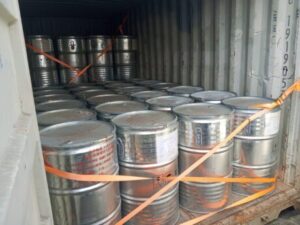
Significant seizures of illicit drugs and prohibited goods were also recorded during his seven-month tenure through surveillance and coordinated operations.
It was a tenure defined by numbers and by discipline. And it has set a high bar.
Kaila expressed gratitude to the Comptroller-General for his promotion and thanked officers, sister agencies, traditional institutions and stakeholders for their support. He appealed for the same level of cooperation to be extended to his successor.
Seme is one of Nigeria’s most strategic border commands — a gateway for trade with Benin Republic and the wider West African sub-region, a corridor for thousands of traders, and a frontline in the war against smuggling.
What happens there affects revenue, security, and the daily livelihoods of border communities.
Under Alumanah, Seme should expect three clear shifts:
First, a tighter revenue regime — where undervaluation, leakages and compromise will be hunted down, not managed.
Second, a cleaner facilitation regime — where legitimate traders will not be delayed, intimidated or exploited.
Third, a more disciplined, professional Command — where teamwork, technology and accountability replace personal interest and shortcuts.
It is a demanding agenda. But Alumanah’s first-day address suggests he did not come to Seme to maintain the status quo.
He came to tighten it, clean it, and move it forward.
For officers, traders and stakeholders at Seme, the message is now unmistakable: the era of compromise is over. The era of results, discipline and dignity has begun
About The Author