Customs Clampdown on Bonded Terminals, Free Zones: Trade Expert Backs NCS, Calls for Comprehensive Performance Audit of Operators
Customs Clampdown on Bonded Terminals, Free Zones: Trade Expert Backs NCS, Calls for Comprehensive Performance Audit of Operators
By Success Okezie

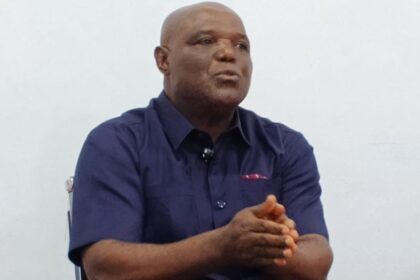
A leading trade expert and Principal Consultant, International Trade Advisory Services Ltd, Mr. Okey Ibeke, has thrown his weight behind the decision of the Nigeria Customs Service (NCS) to suspend further transire processing for bonded terminals, warehouses and Free Trade Zones with unresolved transactions, describing the move as a necessary enforcement intervention that has exposed a deeper national question.
Ibeke, who spoke with maritime journalists in Lagos on Friday, said the Customs action, though strict, was timely and justified, as it has brought to the fore the need to interrogate what Nigeria is really gaining from the extensive fiscal and Customs incentives granted to Free Zone and bonded facility operators.
It would be recalled that the Nigeria Customs Service recently directed that all affected bonded terminals, warehouses and Free Trade Zones with outstanding transire transactions must reconcile their positions before they can process, initiate or obtain approval for fresh transire applications. The directive also reportedly rules out waivers, local clearances or exceptional approvals for affected facilities until the reconciliation is completed.
According to Ibeke, while bonded facilities and Free Trade Zones were originally created to facilitate trade, drive manufacturing, attract Foreign Direct Investment and promote exports, Nigerians are entitled to know what the country is getting in return for the huge incentives.
“We need to ask a very simple but fundamental question: what exactly are many of these Free Trade Zones producing, and where are the exports?” Ibeke queried.
“If the principal justification for the incentives is export-oriented manufacturing, then the public should be able to see the products being manufactured, the volume and value of exports, the markets they are going to and the number of genuine, sustainable jobs being created. That is the essence of a Free Zone,” he said.
The trade consultant warned that the greatest vulnerability in the system arises when the movement of cargo becomes difficult to reconcile, creating loopholes that can be exploited.
He identified possible areas of abuse to include cargo diversion, false declaration, under-valuation and under-declaration, manipulation of quantities, and the unauthorised release of duty-suspended goods into the domestic market without payment of appropriate duties.
Ibeke further noted that weak controls in the transit and warehousing chain could also create opportunities for prohibited or restricted goods to infiltrate the system.
He, however, cautioned that such systemic vulnerabilities should not be interpreted to mean that every bonded terminal or Free Zone operator is involved in illegality.
“The point is not to criminalize every operator. The point is that the system must be strong enough to prevent abuse and to detect it promptly when it occurs,” he stressed.
Ibeke commended the Comptroller-General of Customs, Dr. Bashir Adewale Adeniyi, and the entire leadership of the Service for insisting on full reconciliation before restoring transire privileges to affected facilities.
He said the decision to disallow local waivers or exceptional approvals while outstanding transactions remain unresolved will strengthen compliance and restore integrity to the system.
He, however, urged the Service to ensure that the reconciliation process is transparent, evidence-based, fair and concluded within a reasonable timeframe.
“Legitimate operators should not be held down indefinitely. Once a facility has satisfactorily reconciled its transactions with credible evidence, its operations should be restored without delay,” he advised.
Ibeke also called for a comprehensive reform of the transire monitoring system, including stronger digital tracking of containers, regular and automated reconciliation of transire movements, and better integration of Nigeria Customs Service records with bonded terminal and Free Zone inventory management systems to block leakages and improve accountability.
About The Author