Afolabi To UN: Integrate Investment Into Global Conflict Prevention Architecture
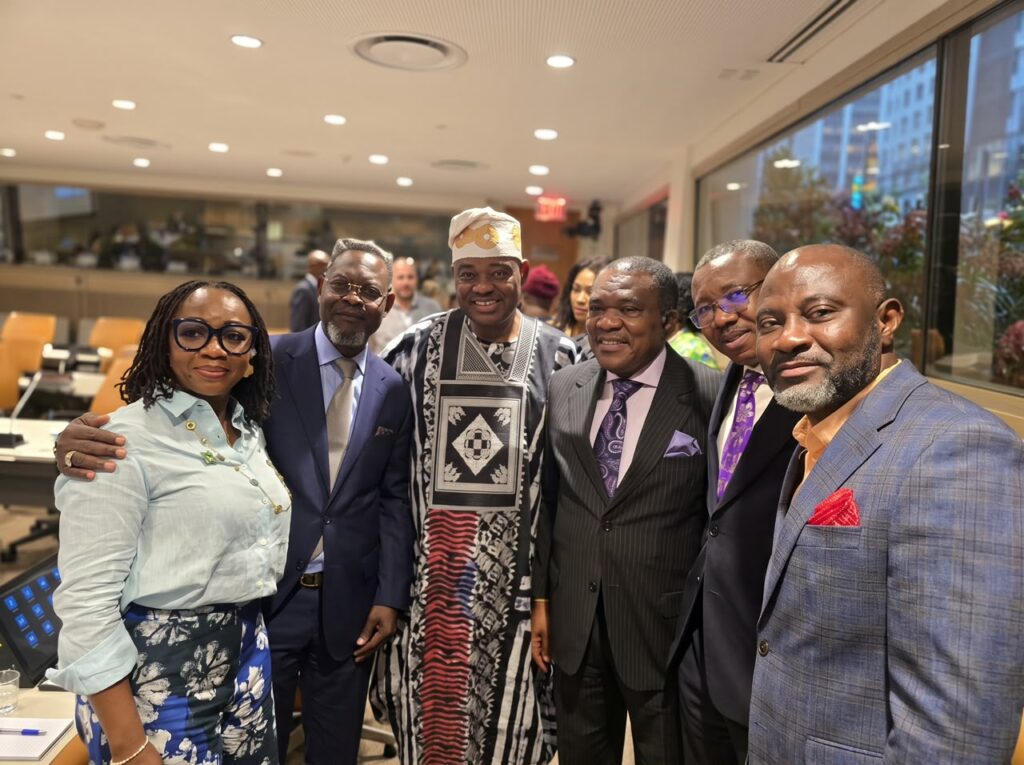
Left-Right): Special Adviser to Lagos State Governor on Climate Financing, Mrs. Titi Oshodi; Chairman, SIFAX Group, Dr. Taiwo Afolabi; Permanent Representative of Nigeria to United Nations, Senator Jimoh Ibrahim; Former Chairman, O’odua Investment Company, Otunba Bimbo Ashiru, GMD, O’odua Investment Company, Abdulrahman Yinusa and the Special Adviser to Ogun State Governor on Development Partners Coordination, Dr. Bayo Adenekan at this year's United Nations General Assembly High-Level Global Executive Roundtable held in New York, United States.
Afolabi To UN: Integrate Investment Into Global Conflict Prevention Architecture
By Success Okezie
Chairman of SIFAX Group, Dr. Taiwo Afolabi, has called on the global community to integrate economic investment as a core pillar of the international conflict prevention strategy, insisting that deliberate investments in infrastructure, trade, employment and economic opportunities remain the most sustainable antidote to instability.
Dr. Afolabi made the call in New York, United States, while speaking at the United Nations General Assembly High-Level Global Executive Roundtable on Diplomacy, Multilateralism and Conflict Resolution, where world leaders, diplomats and top business executives converged to chart a new course for global peace and development.
According to the maritime and logistics magnate, the international community can no longer afford to merely respond to conflicts after they erupt, but must invest heavily in preventive diplomacy, sustainable development and inclusive economic growth.
He said the world is facing an unprecedented convergence of challenges ranging from geopolitical tensions and economic uncertainty to climate pressures, rising inequality and declining trust in institutions, noting that these challenges demand a coordinated, multilateral response anchored on peace and shared prosperity.
“Peace creates the environment for investment, investment creates opportunity, and opportunity strengthens the foundations of peace,” Afolabi stated.
Dr. Afolabi said the nexus between peace and development is even more critical for Africa, where infrastructure deficits, financing gaps, trade barriers and limited economic opportunities continue to undermine development and fuel vulnerability to instability.
He argued that Africa’s peace-building agenda will remain incomplete without a robust investment agenda.
“Africa’s peace building agenda must be accompanied by an investment agenda. We need investment in transport infrastructure, ports, energy, technology, manufacturing, agriculture, healthcare, education and human capital,” he said.
Afolabi called for deliberate efforts to build stronger regional value chains and improve connectivity across African economies, stressing that the much-celebrated African Continental Free Trade Area (AfCFTA) will not succeed on trade agreements alone.
“Trade and connectivity can create shared interests among nations. The success of AfCFTA depends not only on trade agreements but on infrastructure, efficient logistics, digital systems, financing and political cooperation,” he emphasized.
Highlighting the critical role of the private sector in fostering peace, Afolabi said businesses have the capacity to create economic connections that strengthen cooperation between communities, businesses and countries.
Drawing from SIFAX Group’s over three decades of experience across maritime, logistics, aviation, financial services, oil and gas and hospitality, he noted that infrastructure and connectivity should be viewed beyond commercial activities, but as vital instruments for economic development and peace building.
“A functioning logistics system can connect farmers to markets, manufacturers to consumers, businesses to international value chains and countries to one another,” he said.
He added that such economic interconnections generate shared interests and incentives for cooperation, making investment in infrastructure a strategic component of a broader global peacebuilding architecture.
The UNGA Roundtable ended with a consensus that sustainable peace cannot be achieved without sustainable development, and that the private sector must be at the centre of the new multilateralism for conflict prevention
About The Author